
Five ways loyalty programs help brands win in the LLM era
A guest post by Charlie Casey, CEO and Co-Founder of LoyaltyLion

With AI causing information to be condensed and squeezed, how do you retain a competitive edge? This week we hear from Charlie Casey, CEO of and Co-Founder of LoyaltyLion, one of the world’s top-rated loyalty platforms that thousands of Shopify brands use as their loyalty points provider. Prior to founding LoyaltyLion, Charlie joined the Foreign and Commonwealth Office as an Economics Advisor before becoming a consultant at Deloitte.
Over to Charlie…
For years, brands competed for clicks. Now they are competing for answers.
When someone asks an AI tool which brand or product is best in a category, they are not shown ten links and left to decide. They are given a synthesised response built from patterns across reviews, forums, social content and product data. It’s the way that shopping is evolving.
That means visibility is no longer just about ranking. It is about representation. And representation is shaped by the signals customers leave behind.
But what does that mean for your business? How can you compete in such a world?
Loyalty programs, when designed properly, are one of the most effective ways to influence those signals. Here are five ways they can help brands cut through in an LLM-driven world.
1. Turn satisfied customers into structured review volume
Reviews are among the clearest signals that AI systems draw from. They are specific, opinion-based and typically public. There’s a reason Trustpilot is thriving. Yet many brands still rely on passive review collection.
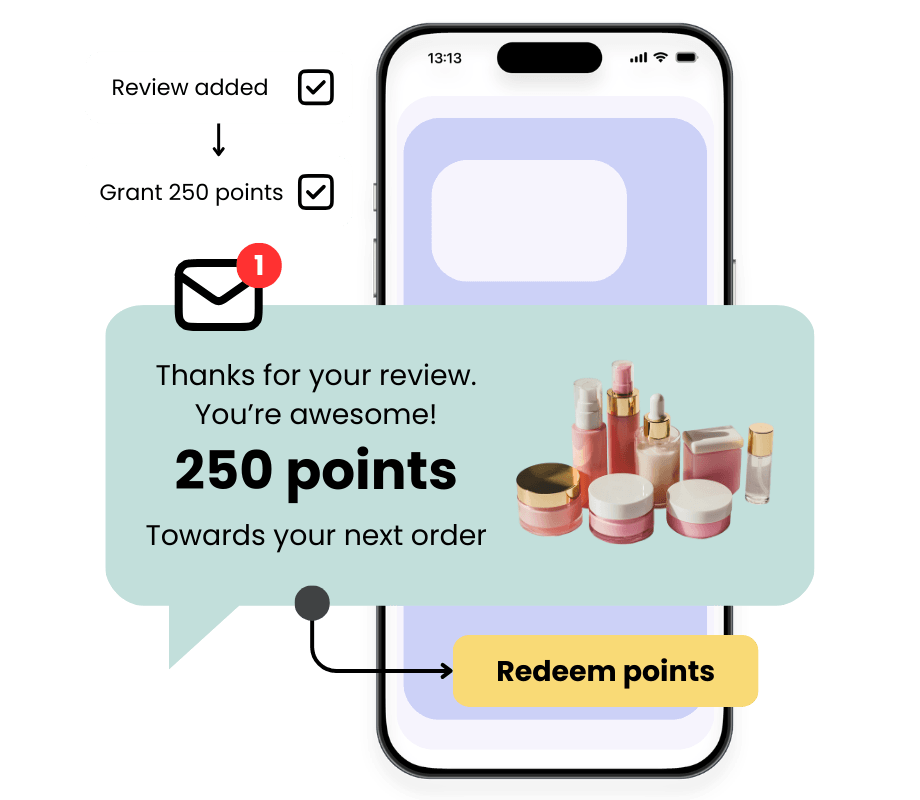
Loyalty changes that dynamic. Our research of over 4000 consumers shows that 70% of customers would earn points by leaving a review. By rewarding feedback, brands can increase both the volume and freshness of reviews. That creates a richer pool of sentiment for AI tools to absorb. It also improves on-site conversion on home and product pages, so the benefit is immediate as well as long-term.
In a world where models reflect patterns, consistent positive review activity increases the likelihood of being surfaced in category recommendations.
2. Create advocacy loops through referrals
Referrals are powerful because they combine trust and amplification. When 61% of customers are willing to earn points by referring others, loyalty programs can turn word of mouth into a measurable channel.
Every referral drives new customers, but it also drives conversation. Those conversations often lead to reviews, social posts and forum mentions. Over time, that compounds into a visible layer of advocacy across the web that LLMs love.
But there’s another benefit to referrals. They help you acquire new customers outside of the GEO/SEO route because they come from trusted sources like friends and family. Consumers will come to you through other channels, and will be encouraged to stay with you because of the loyalty program experience. And then they in turn will tell their friends and the cycle begins.
3. Increase social and community presence
61% of customers will follow a brand on social to earn points. 73% will download an app. 70% will sign up to a newsletter. 63% will opt into SMS.
These behaviours deepen the relationship, but they also increase engagement signals across platforms. Social follows, shares and user generated content create public traces of affinity.
We are already seeing community platforms and discussion threads like Reddit resurface prominently in AI generated answers. Brands that appear regularly in positive social and community contexts benefit from that visibility.
Loyalty programs give brands a clear value exchange to encourage this participation rather than leaving it to chance.
4. Build richer first party data that improves experience
78% of customers say they would complete a quiz or profile in exchange for points. When customers share preferences, brands gain deeper insight into intent. That insight enables better personalization, more relevant communication and more consistent experiences.
Better experiences lead to better reviews and stronger advocacy. In other words, loyalty does not just generate signals directly. It improves the underlying experience that shapes those signals. And signals can be reinforced by data. Used responsibility for real personalization it motivates more people to sign up to your emails, giving you a way to reach them outside of LLMs.
In an LLM era, the quality of customer voice matters as much as the quantity. Loyalty programs help strengthen both.
5. Move from retention mechanic to narrative infrastructure
The biggest shift is conceptual.
Loyalty programs are often seen as a way to increase repeat purchase rates. That remains true. But it is also a way to influence the story told about your brand across the digital ecosystem.
Every incentivised review, referral, follow or subscription contributes to the collective data that AI systems draw from. Brands cannot control what AI will say. They can influence the evidence it sees.
When a model is asked which brands are best, it is pattern matching across available signals. Brands with sparse engagement and limited advocacy have fewer patterns to be recognised. Brands with dense, positive and varied signals have more.
Loyalty programs systematise the creation of those signals.
In the past, brands optimised for traffic. In the present, they must also optimise for representation inside AI mediated answers. Loyalty provides a practical, scalable way to do that.
The brands investing in loyalty today are not only driving higher lifetime value. They are increasing the probability that when consumers ask AI which brands are worth trusting, their name appears in the response.
That is not a technical SEO trick. It is the result of deliberately mobilising customer voices.
In the LLM era, that voice may be the most valuable asset a brand has.
Thank you Charlie and LoyaltyLion! Do you also have a marketing or business case to share? To feature on All About Digital Marketing, please check out the guidelines blog and get in touch. And don’t forget to subscribe.


